
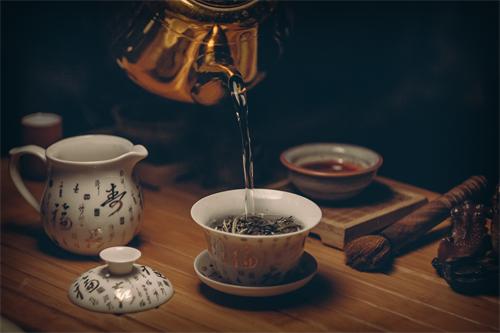
Tea is one of the few beverages that humans have woven so deeply into daily life that it becomes more than something we drink—it becomes a symbol, a ritual, a window into how a society understands hospitality, spirituality, time, class, identity, and community. Although the story of tea begins with a leaf, its cultural expressions reveal the shared threads and striking contrasts across civilizations. From the meditative silence of a Japanese chanoyu to the bustling Moroccan mint tea markets, from the refined afternoon teas of Britain to the earthy churn of Tibetan butter tea, tea has shaped social life in ways that coffee or wine never fully replicated.
1. The Origins of Tea: A Global Journey From a Single Leaf
Although tea has multiple origin myths, most traditions trace the discovery of tea to China, with legends of Emperor Shen Nong in 2737 BCE. Whether or not a leaf accidentally fell into a boiling pot is beside the point—the important thing is that tea evolved from tonic to medicine to everyday beverage, gradually becoming deeply embedded in Chinese philosophy and aesthetics.
By the Tang dynasty, tea was already a cultural symbol celebrated by poets like Lu Yu, whose The Classic of Tea became the world’s first monograph on tea. During this period, Buddhist monks played a crucial role in spreading tea culture to Japan and Korea, where it merged with Zen (Chan) concepts of mindfulness and simplicity.
From China, tea traveled further:
- Along the Silk Road into Central Asia
- Across maritime routes into Southeast Asia
- Through Portuguese traders into Europe
- Via the British Empire into India, Ceylon (Sri Lanka), and Africa
Tea’s global journey is essentially the story of globalization before the word existed. Each culture reinterpreted the beverage through its own climate, crops, religion, and social values, resulting in remarkably diverse tea traditions.
2. East Asian Tea Cultures: Purity, Philosophy, and Aesthetics
China: Diversity and Harmony
China is home to a vast universe of tea types—green, black (called “red tea” in Chinese), oolong, white, yellow, and pu’er. The gongfu tea ceremony, originating in Fujian and Guangdong, focuses on extracting the most expressive flavors from oolong tea using small clay teapots and repeated steeping.
But Chinese tea culture isn’t about one fixed ritual; it emphasizes harmony with nature, balance, and hospitality. Tea is served at home, at business meetings, at weddings, even at job interviews. Tea becomes a quiet language:
- Offering tea to elders → respect
- Serving tea at gatherings → hospitality
- Tea in business → sincerity and trust
- Tea at funerals → purity and remembrance
Tea fits seamlessly into the rhythm of everyday life—never overly formalized, but always meaningful.
Japan: Ritualized Aesthetics and Spiritual Discipline
If Chinese tea culture feels fluid and flexible, Japanese tea culture feels sharply defined. Introduced by Zen monks, the Japanese chanoyu (tea ceremony) developed into a highly choreographed aesthetic system. Every movement—folding a cloth, whisking matcha, placing a cup—is imbued with intention.
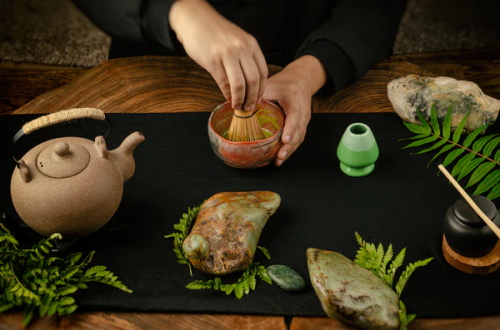
Japanese tea culture embodies:
- Wabi-sabi: beauty in simplicity and imperfection
- Ichigo ichie: the idea that each encounter is unique and unrepeatable
- Mindfulness: presence through ritual precision
Tea rooms are intentionally plain, allowing participants to focus on the mental and spiritual experience. Matcha itself, whipped into a luminous green froth, symbolizes a merging of discipline and sensory pleasure.
Korea: Balance, Nature, and Quiet Everydayness
Korean tea culture shares philosophical roots with China and Japan but leans toward a middle path—less ritualized than Japan, less casual than China.
Historically, Korean monks used tea for meditation, and aristocrats embraced tea as part of Confucian etiquette. Today, Korean tea gatherings often emphasize:
- Natural materials and handmade ceramics
- Slow drinking to foster conversation
- Balancing the senses through aroma, temperature, and taste
Tea becomes a tool for slowing down in a fast-paced society.
3. South and Southeast Asia: Tea as Energy, Identity, and Daily Rhythm
India: The Rebirth of Tea as a National Identity
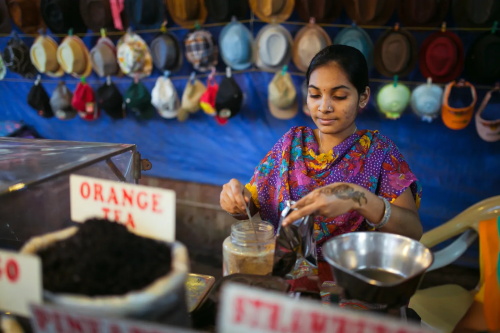
Ironically, India—now one of the world’s largest tea producers—did not drink tea widely until the British colonial era. To support commercial plantations in Assam and Darjeeling, the British promoted tea drinking among Indians, leading to the birth of masala chai, a blend of:
- Black tea
- Milk
- Sugar
- Spices such as cardamom, ginger, cinnamon, or cloves
Chai became a national symbol of warmth and resilience. The chaiwallah, standing at street corners pouring steaming tea from metal kettles, remains an iconic figure.
Thailand and Southeast Asia: Sweetness, Street Culture, and Hybrid Influences
Thai iced tea (cha yen), with its deep orange color and creamy sweetness, reflects trade history: strong Ceylon tea, Chinese spices, and a preference for condensed milk introduced by Western traders. Southeast Asian tea cultures often blend:
- Indigenous herbs
- Chinese tea traditions
- Colonial-era influences
Tea becomes a refreshing antidote to tropical heat and a staple of lively street food culture.
4. Central Asia and the Middle East: Hospitality and Social Bonds
Turkey: Tea as Social Glue
If Japan ritualizes tea and Britain formalizes it, Turkey socializes it. Turkish çay—brewed strong in a two-tiered pot and served in tulip-shaped glasses—is consumed all day long.
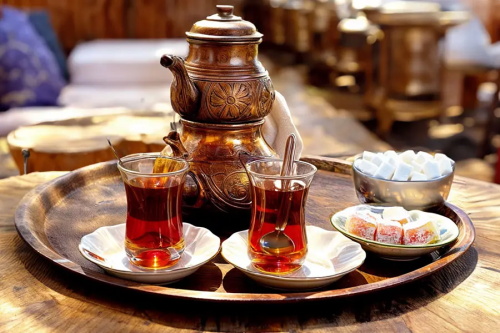
Tea houses (çay bahçesi) function as community hubs where people gather to:
- Discuss politics
- Play backgammon
- Debate life’s problems
- Strengthen friendships
Serving tea is a gesture of kindness and openness. Declining a cup can be interpreted as declining a connection.
Morocco: Mint Tea and Ceremonial Generosity
Moroccan mint tea (atay) blends green tea with fresh mint and plenty of sugar. Prepared using an elevated “pour” that aerates the tea and forms a frothy top, it is both performance and hospitality ritual.
Mint tea in Morocco communicates:
- Respect for guests
- Aesthetic appreciation of scent and color
- The centrality of sugar and sweetness in social life
Every household has its own nuance, making each pour personal.
Persian Tea: Poetry, Reflection, and Intellectualism
In Iran, tea is often brewed strong and diluted to taste, accompanied by rock sugar crystals (qand). Iran’s chaikhaneh—tea houses—have long been gathering places for poets, scholars, merchants, and everyday workers. Tea thus becomes a channel for intellectual and emotional expression.
5. Europe: Colonial Histories, Class, and Everyday Comfort
Britain: The Ritual of Afternoon Tea
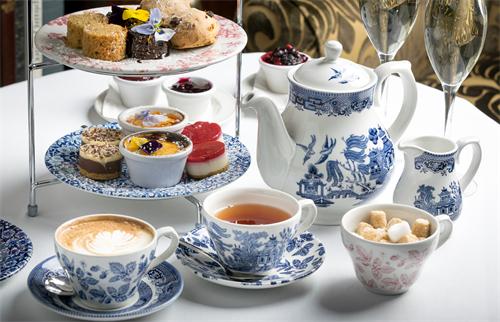
No tea culture is more globally recognized than British afternoon tea. Introduced in the 17th century and popularized by the aristocracy, afternoon tea evolved into:
- A daily pause for refreshment
- A ritual of elegance
- A symbol of refinement
Tea shaped British identity so strongly that the UK established vast colonial plantations (in India, Sri Lanka, Kenya) to secure tea supply. Today, tea remains a symbol of:
- Comfort (“a cup of tea solves everything”)
- Politeness
- Social bonding
Russia: Strength, Samovars, and Winter Warmth
Russian tea is traditionally brewed using a samovar, which keeps water hot for hours—ideal for harsh winters. Tea is often taken strong and sweet, sometimes with lemon, jam, or pastries.
Tea in Russia symbolizes warmth, resilience, and conviviality.
6. African Tea Traditions: Adaptation, Identity, and Community
Tea plantations in Kenya, Malawi, and Tanzania trace colonial origins, yet local communities have adapted tea to their own tastes. Kenya, for example, has developed its own strong, malty black teas—now essential to global tea blends.
In North Africa, tea becomes a bridge between Arab, Berber, and Mediterranean traditions. In East Africa, chai and spiced teas mirror Indian influences brought by migrants.
7. The Deeper Meaning of Tea: Why Cultures Embrace It
Across the world, tea holds a set of shared symbolic meanings:
1. Hospitality
Tea is an instant way to welcome someone—whether in Turkey, China, the UK, or Morocco.
2. Calmness and Mindfulness
Tea preparation often requires patience. Tea forces a pause—a moment of awareness in a busy world.
3. Community
Tea connects people: families, friends, coworkers, strangers.
4. Identity
Tea tells stories about migration, colonization, trade, religion, class, and national pride.
5. Ritual
Even if informal, the act of preparing and serving tea becomes a ritual that structures social life.
8. Modern Tea Culture: Third-Wave Tea, Wellness Trends, and Cultural Hybrids
The 21st century has brought a global tea renaissance:
- Matcha cafés in New York and London
- Artisanal oolong tastings in Europe
- Kombucha fermentation cultures
- Milk tea and bubble tea shops worldwide
- Ethical tea sourcing and sustainable farming
Tea continues to evolve—blending tradition with creative reinvention.
Conclusion: Tea as a Mirror of Humanity
Tea is one of the few cultural practices that touches nearly every continent. Although each culture prepares, serves, and interprets tea differently, these rituals share a universal impulse: the desire to pause, connect, and find comfort in the everyday. Through tea, we see how people build community, express identity, cope with climate, ritualize time, and even negotiate political power or colonial history.
Tea culture reveals that the simplest acts—boiling water, steeping leaves, sharing a cup—can carry extraordinary cultural weight. In every sip lies a fragment of history, a moment of mindfulness, and a reminder of our shared human need for warmth, connection, and meaning.
References
- Benn, James A. Tea in China: A Religious and Cultural History. University of Hawaii Press, 2015.
- Kondo, T. “The Japanese Tea Ceremony and the Ideals of Zen.” Japanese Journal of Religious Studies, 1990.
- Basu, Kaushik. “Chai and the Indian Tea Industry: A Historical Overview.” Economic and Political Weekly, vol. 45, 2010.
- Ukers, William H. All About Tea. Tea and Coffee Trade Journal Company, 1935 (Classic reference on global tea trade and culture).
Recommend:

Why New Orleans Cuisine Is a Cultural Wonderland of African, French, and Caribbean Influences

Why Some Cultures Emphasize Large Portions and Others Value Moderation
The Psychology of Trying New Foods While Traveling
How Manila’s Food Culture Reveals Layers of Spanish, American, and Chinese Influence